


Seller disclosure: DigiRake Store Private Limited sells the DigiRake Retail product linked in this guide. Price and stock can change; check the live listing before ordering.
Haldi kumkum can refer to turmeric and kumkum offered in a ritual or to a social gathering built around that exchange. The meaning, sequence, guest group, foods and gifts vary by region, family and occasion. It should not be treated as one fixed ceremony with universal rules.
This evergreen guide explains the common planning decisions: what the words mean, how the gathering differs from a pre-wedding haldi event, which items may be prepared, how to handle powders thoughtfully, and how to choose boxes and return gifts without making assumptions about every guest.
Quick answer
Haldi means turmeric and kumkum is a red ritual powder. At a haldi-kumkum gathering, hosts may welcome guests, offer the powders according to local custom, share refreshments and give a small token or return gift. Confirm the practice with family or community elders, ask before applying anything to a guest, keep powders clean and labelled, and choose gifts that suit the actual recipient group.
What does haldi kumkum mean?
Haldi is turmeric. Kumkum commonly refers to a red powder used in Hindu ritual and personal practice, although ingredients and regional names can differ. “Haldi kumkum” therefore names both the paired materials and, in many communities, a gathering at which they are offered.
Families may connect the gathering with festivals, seasonal visits, weddings or other auspicious occasions. The social element can be as important as the ritual one: guests meet, exchange greetings, share food and receive a small gift. Avoid presenting one regional sequence or recipient rule as the only correct form.
Haldi kumkum versus a wedding haldi ceremony
A pre-wedding haldi ceremony usually centres on applying a turmeric preparation to a bride or groom as part of wedding celebrations. A haldi-kumkum gathering usually refers to offering small amounts of turmeric and kumkum to guests according to a community’s practice. They can occur within the wider wedding context, but they are not interchangeable terms.
The distinction matters when searching for supplies. A person planning a wedding haldi may need clothing protection, a large application mixture and event décor. A person hosting haldi kumkum may instead need small clean powder portions, containers, a tray, invitations and return gifts.
A common ceremony flow—with room for variation
- Invitation: share the date, time, location, expected duration and any dress or participation information.
- Welcome: receive guests and explain the local practice when someone is unfamiliar with it.
- Offering: present haldi and kumkum in the manner followed by the host family, with consent.
- Conversation or devotional element: include prayers, songs, readings or simply social time as appropriate to the occasion.
- Refreshments: serve food and drink with suitable hygiene and allergy information.
- Gift or vaan: offer a small item where that custom is followed.
- Farewell and cleanup: pack remaining powders safely and clear spills before they stain surfaces.
This is a planning outline, not a prescribed ritual. The order and activities can differ substantially. When the event has religious significance, follow the family’s trusted guidance.
Haldi kumkum items checklist
| Item | Purpose | Practical check |
|---|---|---|
| Haldi and kumkum | Ritual offering | Known ingredients, labels and clean dry handling |
| Separate containers | Prevent colour mixing | Usable opening, stable base and clean lid |
| Tray or thali | Organise the setup | Level surface and easy cleanup |
| Applicators or spoons | Controlled handling | Separate tool for each material |
| Cloth or mat | Protect the table | Washable or stain-tolerant material |
| Invitations or guest list | Manage timing and quantity | Accurate attendance and contact details |
| Refreshments | Hospitality | Food hygiene and allergy awareness |
| Return gifts | Optional token or vaan | Recipient suitability, packing and delivered cost |
Handling haldi and kumkum thoughtfully
Keep powders in their labelled original packs until setup so ingredient and intended-use information is available. Transfer only a modest quantity with clean, dry tools. Do not top up a container over old powder indefinitely; empty and clean it using a method suitable for the box material.
Turmeric can stain fabric and porous surfaces. Kumkum composition can vary, and some guests may have skin sensitivity or prefer not to receive an application. Ask first, avoid the eyes and broken skin, and provide a no-contact way to participate. Do not make medical or purity claims unless supported by the product documentation.
Choosing a haldi kumkum box
A single-compartment box suits one dry powder. A double box is more convenient when haldi and kumkum need separate cavities. A roli-chawal set may include different spaces for powder and rice. Product titles are inconsistent, so count the actual compartments and inspect the internal photographs.
Check the usable cavity rather than the decorative outer diameter. Look at divider height, lid movement, hinge clearance, applicator storage and how easily powder can be removed from corners. A decorative lid should not be assumed airtight or travel-proof. See the detailed haldi-kumkum box guide before choosing a format.
See a current wooden kumkum box
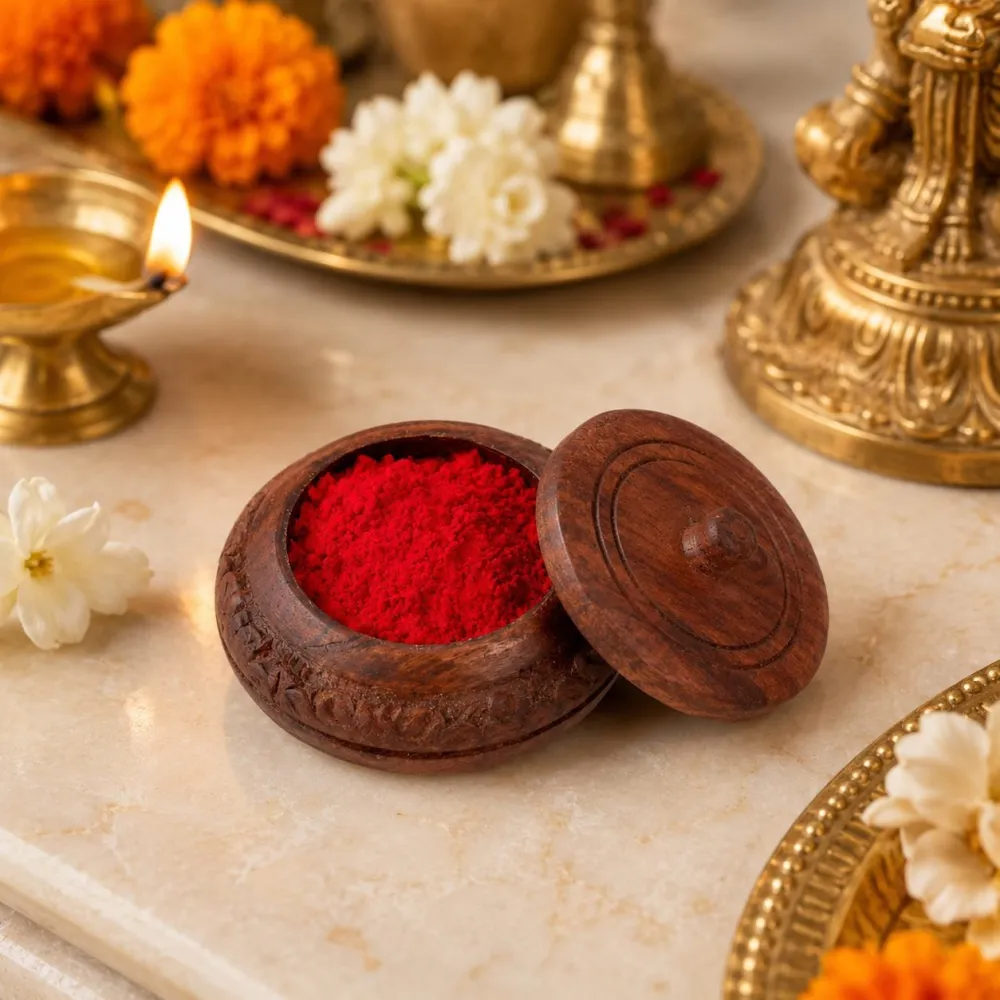
The current DigiRake wooden Sindoor Box is a covered single-box format described for sindoor and kumkum. Confirm its dimensions, cavity, finish and suitability for your intended dry material on the live page.
Seller disclosure: DigiRake Store Private Limited sells this product. It is a single-box format, not a claimed two-compartment haldi-kumkum set; verify the live specifications before ordering.
Single box, double box or separate containers?
A single box is compact and straightforward to clean, but two single boxes are needed when both powders must remain separate. A double box keeps the pair together and can simplify presentation, provided the divider is high enough and each cavity is accessible. Two independent lidded containers offer the clearest separation during storage and transport.
Choose based on how the powders will actually be handled. Do not overfill beyond the divider or rim. If filled boxes must travel, keep them upright inside secondary sealed packaging; a hinged or lift-off decorative lid is not automatically spill-resistant.
Haldi kumkum gift and return-gift planning
Common gift directions include a kumkum box, incense holder, small toran, compact jewellery box, useful kitchen item, thamboolam bag or another locally appropriate token. The gift should fit the guest group rather than merely follow a trending list. A mixed-age or mixed-practice group may benefit from a neutral household item.
For quantity orders, confirm whether the gift is per person, per household or limited to a particular guest group. Approve the exact product and packing, calculate the landed cost and keep a practical buffer for unexpected attendance or damage. The haldi-kumkum return-gift guide covers sampling, quantities and packing.
How to calculate gift quantity
- Create the most current guest list.
- Define the distribution unit: individual guest, couple or family.
- Separate any premium tier for close family or organisers.
- Add a reasoned buffer based on attendance uncertainty and replacement availability.
- Count received units by carton and inspect samples immediately.
- Keep reserve gifts separate from the distribution table.
A fixed buffer percentage is not universal. A confirmed small gathering needs less contingency than a community event with open attendance.
Decoration and setup
Use a stable central tray, easy-to-clean table covering and enough room to separate powders from food and lamps. Flowers, rangoli and torans may be included according to preference and custom, but they should not create trip hazards or crowd a diya, incense ember or serving area.
Protect porous furniture from turmeric and kumkum. Keep water vessels and fresh flowers far enough away that spills cannot enter powder boxes. If children are present, supervise small applicators, loose powder and any flame continuously.
Invitation planning
An invitation should state the occasion, host, date, start and end time, full location, contact method and any useful access information. Mention dress expectations only when they are genuinely relevant, and avoid wording that pressures a guest to participate in every ritual element.
For digital invitations, send a readable image plus the important details as text so recipients can copy the address and search messages later. Ask for replies by a practical date when gift and food quantity depend on attendance.
Inclusive and respectful hosting
Family and community customs may differ on whom to invite, who offers the powders and how they are applied. Explain the event respectfully and allow guests to decline touch, powder application, food or a particular gift without embarrassment. Do not assume marital status, religious practice or familiarity from appearance.
When unsure about a ritual detail, ask a trusted elder, priest or knowledgeable member of the relevant community. An online checklist can support logistics but should not overrule the people whose tradition is being observed.
After the gathering
- Close and label remaining powder in its appropriate container.
- Discard any material contaminated by food, water or debris.
- Brush dry powder from the tray before using moisture.
- Clean wood, metal, fabric and flooring by their material-specific methods.
- Dry boxes completely before refilling or storage.
- Record remaining gifts and reusable event supplies for the next occasion.
For differences in terminology, ingredients and storage, read kumkum versus sindoor and the broader kumkum-box buying guide.
Common planning mistakes
- Treating one family’s ceremony sequence as universal.
- Confusing a pre-wedding haldi event with a haldi-kumkum gathering.
- Applying powder without asking the guest.
- Using unlabelled powder with unknown ingredients.
- Filling boxes to the rim before transport.
- Allowing food, water or flower moisture to contaminate powders.
- Ordering return gifts without approving size, material and packing.
- Using a colour name such as “gold” or “silver” as a material claim.
Frequently asked questions
What is haldi kumkum?
It can mean the paired turmeric and red kumkum powders or a gathering at which they are offered according to regional and family practice.
Is haldi kumkum the same as the wedding haldi ceremony?
No. A wedding haldi ceremony generally centres on applying a turmeric preparation to the bride or groom. A haldi-kumkum gathering has a different social and ritual context, though customs can overlap.
What items are needed?
Common planning items include labelled haldi and kumkum, separate containers, a tray, clean applicators, a protected surface, invitations, refreshments and optional return gifts. The ritual list depends on local custom.
What is a suitable haldi kumkum gift?
A kumkum box is directly related to the occasion, while a neutral pooja or household item may suit a broader guest group. Choose by usefulness, recipient and budget.
Should a kumkum box have one or two compartments?
Use one compartment for one powder and two genuinely separated compartments when haldi and kumkum must share one unit. Two individual boxes are another practical option.
Can the boxes be filled before the function?
They can be prepared when family practice requires it, but use clean dry tools, avoid overfilling and use secure secondary packaging. Empty-box gifting is simpler and reduces leakage and contamination risk.
Who should be invited to haldi kumkum?
Invitation customs vary by family, region and occasion. Follow the host community’s guidance while communicating respectfully and avoiding assumptions about individual guests.
Final recommendation
Plan haldi kumkum around the family’s real custom and the comfort of guests. Keep the materials clean and clearly separated, distinguish ceremony needs from gift procurement, and choose boxes or return gifts only after checking their actual size, material, packing and intended use.