


Disclosure: This article contains an Amazon affiliate link. DigiRake may earn a commission from qualifying purchases at no additional cost to you.
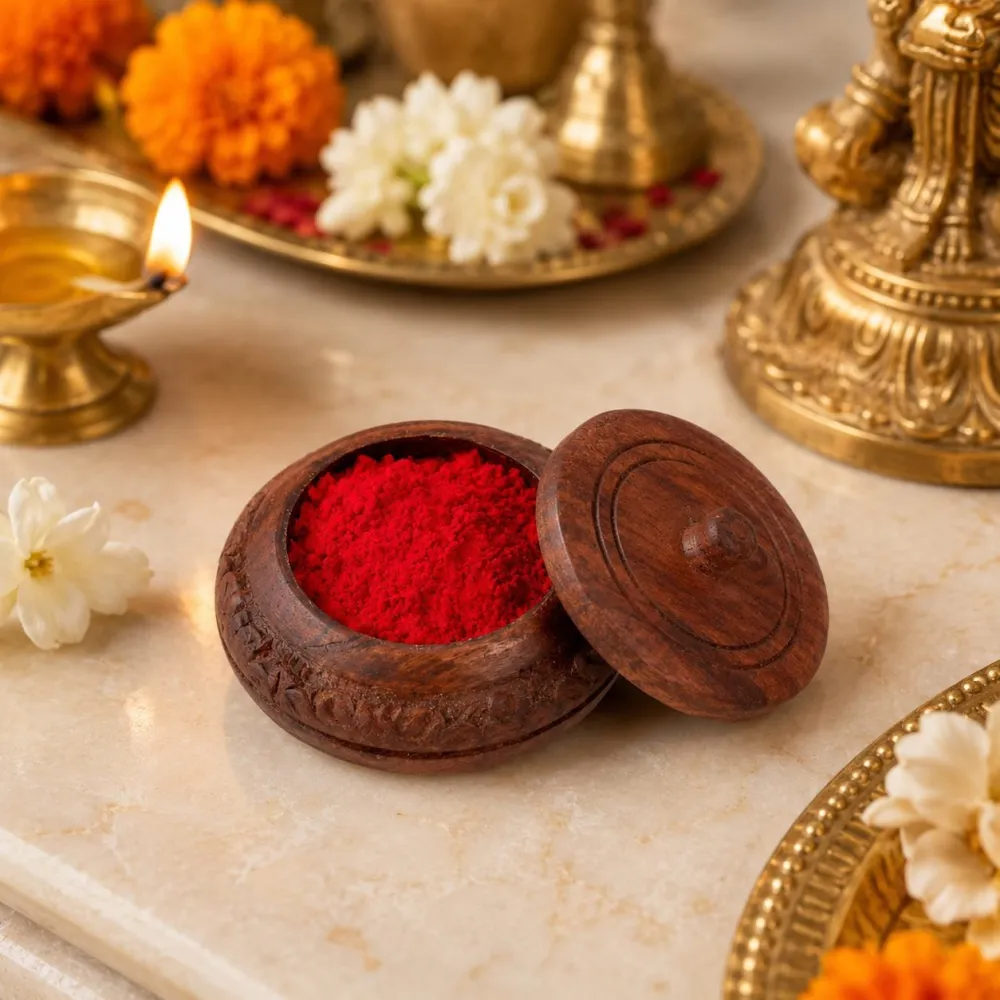
A kumkum box, also called a kumkum dibbi, kumkum bharani, sindoor box or roli-chawal box in different buying contexts, is a small container used to organise dry ritual powders. The best choice depends on what you plan to store, whether you need one or two compartments, the material, lid design, cleaning method, and whether the box is for daily pooja, gifting or a bulk function.
Quick answer
Choose a single-compartment box for one dry powder and a double-compartment box when haldi and kumkum or roli and chawal must remain separate. Verify the internal dimensions, lid fit, material description and intended use from the live product listing. Do not assume that a decorative lid is airtight, leakproof or suitable for liquids.
Kumkum-box selection at a glance
| Need | Suitable format | Main buying check |
|---|---|---|
| Daily kumkum storage | Small single box | Easy opening and dry cleaning |
| Haldi and kumkum together | Double compartment | Powders remain physically separated |
| Roli and chawal | Two-part or tray-style set | Compartment depth and spoon space |
| Pooja-room display | Decorative round, floral or traditional design | Stable base and manageable lid |
| Return gifts | Standardised compact model | Sample approval, packing and landed cost |
| Premium silver purchase | Documented silver article | Purity, net weight, hallmark and invoice |
| Travel | Secure compact container | Closure, secondary pouch and spill control |
Kumkum box, sindoor box, dibbi and bharani: what do the names mean?
The names overlap in online shopping, but their cultural use may differ by family and region. “Kumkum box” is commonly used for a pooja container. “Sindoor box” usually describes a container for sindoor. “Dibbi” means a small box, while “bharani” refers to a small vessel or container in several Indian-language shopping contexts. “Roli-chawal box” usually refers to a two-part ritual set.
Use the product layout rather than the title alone. A listing called a sindoor box may have one cavity, while a haldi-kumkum box may have two. Confirm the actual photograph, compartment count and dimensions.
Main types of kumkum boxes
Single-compartment box
A single box is suitable when the user stores only one dry powder. It is compact, easier to clean and generally easier to pack as a return gift. Check whether the lid lifts, slides, twists or hinges, because the opening method affects daily convenience.
Double-compartment box
A double box helps keep two powders separate. Common combinations include haldi and kumkum or roli and chawal. The divider should reach high enough to reduce mixing during normal handling. It should still be treated as a tabletop container rather than a guaranteed spillproof travel case unless the manufacturer explicitly says otherwise.
Box with applicator or spoon
Some designs include a small stick or spoon. Confirm where it is stored and whether it touches both powders. Separate applicators can reduce accidental mixing, but tiny removable pieces need careful handling around young children.
Tray and gift-set formats
Wedding, pooja and thamboolam gifting sometimes uses a decorative box on a small plate or tray. This creates a stronger presentation but increases packing space and breakage risk. Measure the complete set, not just the powder cavities.
Materials compared
| Material description | Advantages | Important limitations |
|---|---|---|
| Wood | Warm traditional appearance, light weight, useful for return gifts | Avoid soaking; colour powders can stain unfinished surfaces |
| Brass | Traditional metal appearance and good structural weight | May darken; confirm whether the finish is solid brass or brass-colour |
| Silver | Premium ceremonial gifting and long-term value when purity is documented | Price depends on fineness and net weight; verify hallmark and invoice |
| German silver | Silver-colour decorative appearance at a lower price | It is not pure silver; alloy and plating descriptions must be clear |
| Aluminium or other metal | Lightweight, mouldable and suitable for decorative shapes | Finish may scratch; do not market it as silver without evidence |
| Plastic or resin | Light, affordable and available in many colours | Check hinge quality, odour, finish and intended storage use |
Read the dedicated kumkum-box material comparison before choosing by appearance alone.
How to choose the correct size and capacity
- Decide the number of powders: one compartment for one powder; two for haldi-kumkum or roli-chawal.
- Check internal size: outer dimensions include walls, borders, handles and decorative parts.
- Estimate refilling frequency: a small daily-use box can be refilled from a larger sealed pack.
- Consider finger or spoon access: very narrow cavities may look attractive but be difficult to use.
- Check lid clearance: loose powder should not be filled to the rim.
- Keep different products separate: do not mix cosmetic sindoor, pooja kumkum, turmeric and rice unless that is the intended ritual use.
How to store kumkum and sindoor in a box
Start with a clean, completely dry container. Add only a modest quantity rather than filling to the top. Keep the box away from water, oil lamps, incense ash, direct sunlight and humid corners. Use dry hands or a clean applicator. If the powder changes smell, texture or colour, follow the product manufacturer’s storage guidance rather than assuming the container can preserve it indefinitely.
The box stores the powder; it does not verify the powder’s ingredients or safety. Commercial formulations vary, so retain the original label and ingredient information where possible.
Cleaning and stain prevention
- Empty loose powder into an appropriate temporary container.
- Use a soft dry brush or cloth first.
- For metal or plastic, use only the mild cleaning method allowed by the seller.
- For wood, avoid soaking and dry immediately after limited surface cleaning.
- Do not use abrasive powder on plated, painted or embossed finishes.
- Allow the box to dry fully before refilling.
- Test any cleaner on a hidden area.
Kumkum boxes for pooja rooms
A stable, easy-to-open design works better than a highly ornate box that tips when the lid is lifted. Keep it on a dry shelf with enough distance from diyas, camphor flames and incense ash. If several powders are used, label or consistently position each compartment to prevent mixing.
Kumkum boxes as return gifts
Compact boxes suit Haldi Kumkum functions, Varalakshmi Vratham, Navratri, weddings and other family events, but the correct product depends on the recipient group and family tradition. For a quantity order, approve one physical sample and confirm:
- Exact material and colour
- Compartment count and usable depth
- Lid and hinge operation
- Individual packing
- Carton quantity and protection
- Final price including tax, packing and shipping
- Stock and event-date delivery
Use the existing Haldi Kumkum return-gift guide for event planning and the wholesale pooja return-gift guide for procurement controls.
Approved DigiRake product references
Verify the live product page for material, dimensions, contents, current price, availability and delivery before ordering.
- Approved Amazon Kumkum Box: View product on Amazon ↗
- Wooden Sindoor Box: View Prakrima product ↗
- Round Kumkum Box — Single: View Prakrima product ↗
Explore the complete kumkum-box cluster
- Silver kumkum-box buying checks
- Kumkum-box materials compared
- Haldi-kumkum, roli-chawal and double-box guide
- Kumkum vs sindoor
- Kumkum-box designs
- Kumkum box online vs near me
Planning the wider occasion? Read the haldi-kumkum ceremony, items and gift-planning guide.
Frequently asked questions
Is a kumkum box the same as a sindoor box?
The shopping terms overlap, but kumkum and sindoor may be used differently depending on region, ritual and personal practice. Check the container’s actual layout.
Should I buy a single or double kumkum box?
Choose single for one powder and double when two items need separation, such as haldi and kumkum or roli and chawal.
Is German silver the same as pure silver?
No. German silver is a silver-colour base-metal alloy and should not be marketed as pure silver.
Can I wash a wooden kumkum box?
Avoid soaking. Use dry cleaning first and follow the seller’s care instructions for limited surface cleaning.
Are kumkum boxes leakproof?
Do not assume so. A lid can reduce dust and casual spillage, but leakproof performance requires an explicit manufacturer claim and suitable testing.
Can a kumkum box be used for liquids?
Use it only for the substances specified by the manufacturer. Many decorative boxes are intended for dry powders, not liquids or oils.
Current wooden and metal kumkum-box options
Check the live listings for compartment count, dimensions, finish and availability before choosing:
Seller disclosure: DigiRake Store Private Limited sells the products linked above. Prices and stock can change; verify the live listing before ordering.
Final recommendation
Choose by compartment count, usable dimensions, material, lid design and actual use. Verify every commercial claim from the live listing and treat decorative appearance as secondary to convenient, dry and clean storage.