


Seller disclosure: DigiRake Store Private Limited sells the DigiRake Retail products linked in this guide. Prices and stock can change; check the live product page before ordering.
A dhoop stand should be chosen for the incense format you actually burn—not only for its appearance. Dhoop sticks, cones, ready-made sambrani cups and loose resin can differ greatly in shape, heat and residue. A stand that is suitable for one format may be unsafe or impractical for another.
This guide explains how to compare dhoop stands for home and pooja-room use, what each common design does, and which currently stocked DigiRake options fit different routines. Start with compatibility, stability and cleaning; treat style as the final filter.
Quick answer
For a ready-made sambrani cup, choose a stable stand whose product instructions explicitly support the cup size. For dhoop plus agarbatti, choose a verified 2-in-1 design. For cones, loban or other high-heat formats, use a purpose-built metal burner only when its listing confirms compatibility. Never place a burning cup or cone directly on bare wood.
Dhoop stand types compared
| Design | Best suited to | Main advantage | Check before buying |
|---|---|---|---|
| Compact covered stand | Compatible sambrani or dhoop cups | Contained, space-saving form | Internal cup clearance and heat-contact insert |
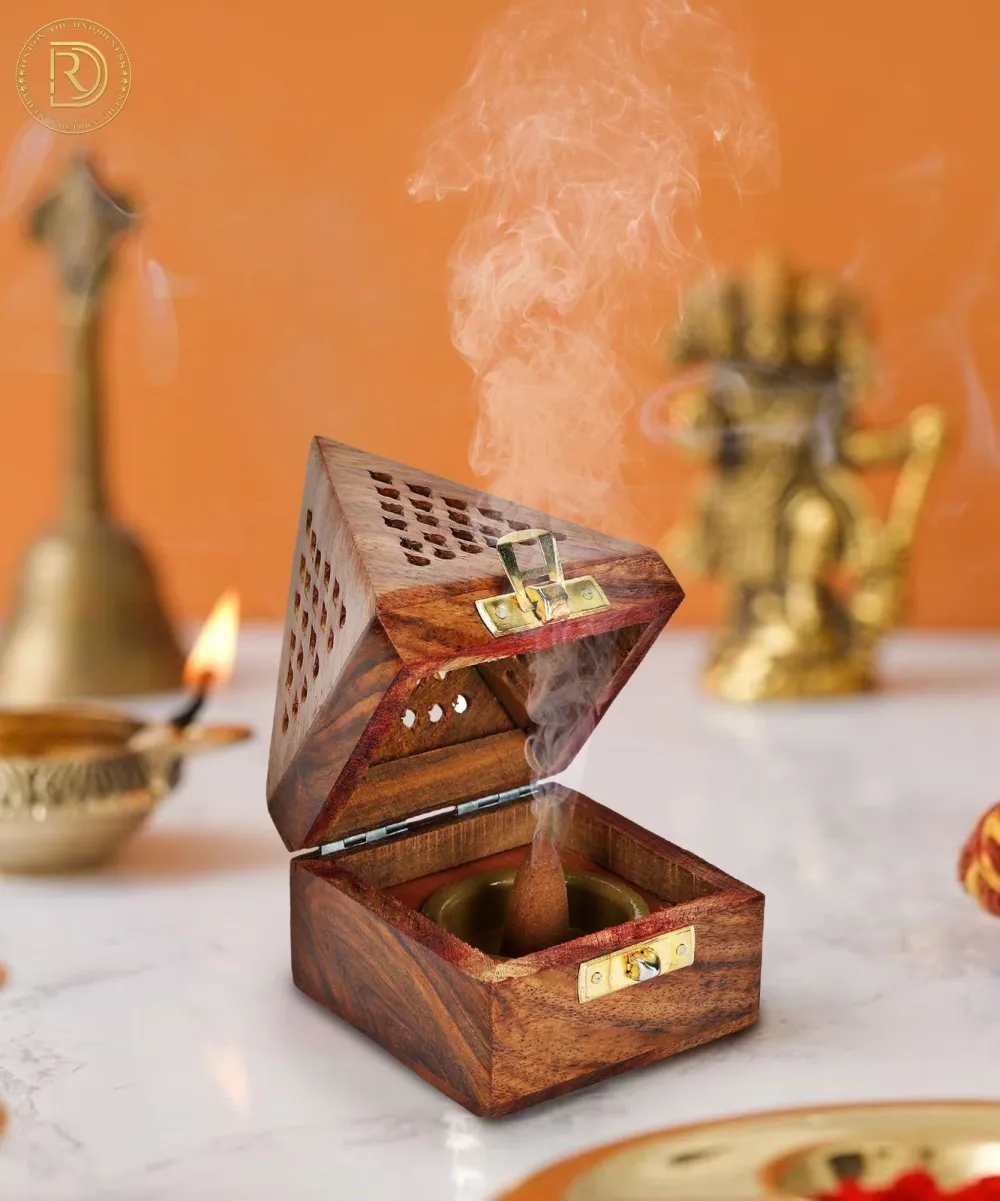
| Hut or pyramid stand | Formats named on the listing | Decorative enclosure and ash containment | Vent openings, base stability and cleaning access |
| 2-in-1 holder | Agarbatti plus a compatible dhoop format | One accessory for two routines | Separate stick hole and dhoop recess |
| Metal burner | Only the dhoop, cone, loban or sambrani formats specified | Durable heat-contact body | Hot exterior, lid handling and surface protection |
| Open dish | Cones or cups only when explicitly approved | Easy visibility and cleaning | Dish diameter, heat resistance and ash path |
Compare currently stocked dhoop stands
These products were in stock when this guide was updated. Match the live listing to your incense format and confirm dimensions before purchase.
- Dhoop Stand 3 Inch — compact sambrani-cup stand ↗
- Cup Saucer Dhoop Stand — dhoop and agarbatti format ↗
- Dhoop Stand Octagon Hut — enclosed wooden design ↗
- Dhoop Square — covered square-box design ↗
- Iron Incense Burner Medium — metal burner option ↗
Seller disclosure: DigiRake Store Private Limited sells these products. Use only with the incense formats stated on the current product page.
Match the stand to the incense format
Dhoop sticks
A dhoop stick is usually thicker than an agarbatti stick and may not fit a narrow stick hole. The holder needs a correctly sized opening or another support method specified by its maker, plus a base long or wide enough to catch falling ash. Do not enlarge a hole yourself: that can weaken the holder and still leave the stick unstable.
Dhoop and incense cones
A cone burns toward its base, so heat becomes concentrated at the contact point. Use only a cone-compatible dish, recess or burner. Decorative wood, resin or painted surfaces are not substitutes for a heat-resistant insert. A backflow cone also needs a dedicated smoke channel; learn the difference in our backflow incense holder guide.
Ready-made sambrani cups
A ready-made cup should sit upright without being squeezed against the walls or lid. Measure its base diameter and height, then compare those measurements with the live holder specifications. The support should carry the cup securely, with room for smoke to leave. Read our cup sambrani use and safety guide before the first burn.
Loose sambrani resin or loban
Loose resin is commonly heated on charcoal or another dedicated heat source. Charcoal produces intense heat and is not automatically compatible with a wooden dhoop stand, stick holder or cone dish. Use a burner whose instructions explicitly allow the intended method, follow the charcoal maker’s directions and use proper tools. If the listing is silent, do not assume compatibility.
How to choose a dhoop stand for home
- Name the format. Write down whether you use a thick dhoop stick, ordinary cone, backflow cone, ready-made cup or loose resin.
- Check explicit compatibility. Product photographs are not enough. Look for your exact format in the current description.
- Measure the incense. Compare cup or cone width and height with the stand’s usable interior space.
- Inspect the heat-contact area. Confirm what physically supports the burning item and whether a suitable insert is included.
- Check the base. Prefer a level, non-wobbling footprint with enough ash-catching area for the intended format.
- Consider ventilation. Covered designs need the openings intended by the maker; never block them to change the smoke effect.
- Plan cleaning. Look for accessible surfaces or a removable insert and follow finish-specific care instructions.
Wooden versus metal dhoop stands
A wooden dhoop stand can suit a traditional pooja setting, but the wood should be the outer body rather than an improvised burning surface. Verify the supplied heat-contact area and the permitted incense type. Keep soot and moisture from building up on the finish.
A metal burner may support more heat-intensive formats when the manufacturer says so, but metal conducts heat. The body, lid and handle can remain hot after visible smoke stops. Place it on a suitable protected surface and do not pick it up during use.
Neither material is universally better. The safer choice is the design tested and described for your format, used exactly as directed.
Covered, open and 2-in-1 designs
A covered or hut-style stand can help contain ash and visually soften the burning area. It is not smoke-free: smoke still exits through openings, and the enclosure can stay warm. Confirm that the lid has enough clearance and never open it while the contents are burning unless the instructions specifically require that step.
An open stand makes it easier to see the ember and remove cooled ash, but it offers less protection from draughts. A 2-in-1 design is useful when a household alternates between agarbatti and dhoop. Confirm that each part is purpose-built; a central bowl does not make every stick stand suitable for cones or cups.
Dhoop box and square holders
A dhoop box is a covered stand with a chamber or cup support and openings through which smoke escapes. Square and hut forms can help contain cooled ash and suit buyers who prefer an enclosed appearance. They do not trap or filter smoke, and the lid, latch and outer body may become warm during use.
Check the internal width and height rather than relying on the outside dimensions. Confirm the permitted dhoop or sambrani format, how the included ash cup sits, which openings must remain unobstructed and whether the product should be latched during a burn. Never force a large cup into a small box, add a charcoal disc without explicit approval, or open a hot enclosure with bare hands.
Safe placement and ventilation
- Use a stable, level and appropriately heat-protected surface.
- Keep it away from curtains, paper, garlands, clothing and shelf edges.
- Leave clear space above the stand so heat and soot do not collect under a shelf.
- Keep children and pets away throughout burning and cooling.
- Avoid strong fan airflow that can scatter ash or make the ember burn unevenly.
- Ventilate the room and reduce or stop use if smoke causes irritation.
- Never leave burning incense unattended or move a hot holder between rooms.
A holder contains the incense; it does not filter its emissions. For a fuller discussion, see our evidence-based incense smoke and ventilation guide.
How to use a dhoop stand
- Read both the incense and holder instructions.
- Set the empty stand on its final protected surface before lighting anything.
- Place the incense in the designated recess, cup support or hole.
- Light and extinguish the flame according to the incense instructions, leaving only the intended ember.
- Watch the first burn to confirm stability, clearance and ash collection.
- Let the incense and entire holder cool completely before touching, emptying or cleaning it.
If you use the thick stick format, follow the separate step-by-step dhoop stick guide.
Cleaning and maintenance
Wait until every component is cold. Remove loose ash with a soft, dry brush. For a removable metal insert, follow the product instructions, avoid abrasive tools on decorative finishes and dry it fully before reassembly. Use minimal moisture on wood and never soak a wooden body.
Backflow residue can feel oily and may require a different cleaning method, while resin and charcoal residue can be stubborn. Do not scrape a painted or coated surface with a blade. Replace a stand if its heat-contact area is cracked, badly warped, loose or otherwise unable to support the incense securely.
Common buying mistakes
- Choosing by appearance without checking the permitted incense format.
- Assuming “dhoop” always means the same size or product type.
- Putting a hot cone or cup directly onto decorative wood.
- Buying a closed design without checking internal clearance.
- Treating a handle as permission to carry a burning metal burner.
- Using a backflow holder for ordinary cones and expecting the waterfall effect.
- Forcing loose resin or charcoal into a holder not designed for it.
Frequently asked questions
Which dhoop stand is best for a pooja room?
The best stand is stable, easy to clean and explicitly compatible with the incense you use. For a small space, prioritize a compact footprint and safe clearance over ornamentation.
Can a dhoop stand hold agarbatti?
Only if it includes a correctly sized incense-stick hole and the current listing identifies that use. A cup-only stand should not be treated as an agarbatti holder.
Can I put a sambrani cup in a wooden dhoop stand?
Yes only when the stand is designed for that cup size and provides the intended support or insert. Never place a burning cup directly on bare wood.
Can I use a normal cone in a backflow stand?
It may burn, but an ordinary cone does not contain the hollow channel required for the downward smoke effect. Follow the holder instructions and use only compatible cones.
Why does dhoop go out in a covered stand?
The cause may be the incense, lighting method, moisture or airflow. Do not drill holes or modify the stand. Check the instructions and make sure its designed vents are unobstructed.
How long should a dhoop stand cool?
There is no universal time because materials, incense and room conditions vary. Treat the stand and residue as hot until they are completely cool to the touch, and never test the ember with bare fingers.
Final recommendation
Choose the incense format first and the stand second. A compact cup stand, a 2-in-1 holder, an enclosed wooden design and a metal burner solve different problems; none is automatically universal. Confirm live compatibility and dimensions, place the stand safely, ventilate the room and let every part cool before handling.