


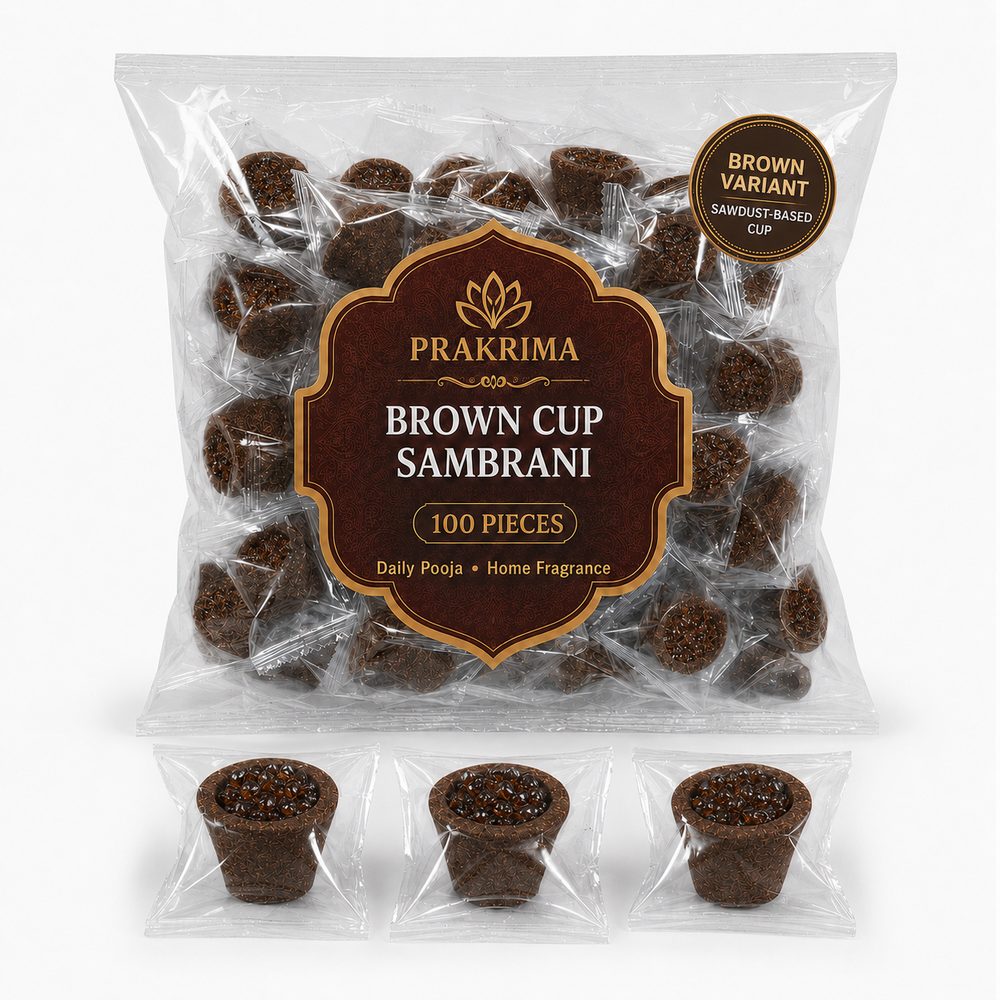
Sambrani dhoop generally refers to fragrant incense associated with benzoin-type resin, burned in traditional loose form or sold as powders, sticks, cones and ready-to-light cups. Product labels are not standardised, so two items called “sambrani” may have very different ingredients, smoke output and lighting methods.
This guide explains the main forms, how sambrani differs from the broader word dhoop, what to verify on a label and how to reduce avoidable fire and smoke exposure.
What is sambrani?
Sambrani is a regional name commonly associated with aromatic resin incense, often linked to benzoin. Traditionally, resin or a prepared mixture may be placed on a hot charcoal ember or another appropriate heat source. Modern commercial products can combine fragrance, wood powder, binders and other combustible ingredients in a convenient format.
The name alone does not prove that a product contains pure natural resin. Check the ingredient declaration and manufacturer information instead of relying on words such as natural, herbal or traditional.
What does dhoop mean?
Dhoop is a broader incense category. It may describe a combustible stick without a bamboo core, a cone, powder, resin mixture or another fragrant preparation. In everyday shopping, “sambrani dhoop” can therefore mean a sambrani-scented dhoop product rather than loose resin.
This explains why apparently similar search results may show cups, thick sticks, cones and packets of powder. Identify the physical format before comparing price or quantity.
Common sambrani dhoop formats
| Format | How it is typically presented | Main buying check |
|---|---|---|
| Loose resin or granules | Small aromatic pieces burned with a suitable heat source | Ingredient identity and safe charcoal/resin burner instructions |
| Powder or prepared mixture | Loose material measured into a purpose-made burner | Lighting method, quantity and compatible holder |
| Dhoop stick | Solid combustible stick, often without bamboo | Diameter, length, burn position and ash support |
| Cone | Free-standing tapered incense | Heat-resistant base and residue clearance |
| Cup sambrani | Preformed combustible cup lit at the rim | Stable heat-resistant holder, ventilation and individual wrapping |
Never move one format into a holder designed for another without verifying compatibility. A wooden stick holder may not safely support a hot sambrani cup or charcoal.
What is cup sambrani?
A ready-to-light cup contains a combustible incense mixture formed into a small cup-like body. The rim is ignited, the flame is extinguished according to the instructions, and the cup continues to smoulder. It avoids separately measuring loose ingredients, but it still produces heat, smoke and hot residue.
Cup colour does not establish ingredients or quality. Brown and black cups can use different bases, fragrances or manufacturing processes, and appearance alone cannot identify them. The complete cup-sambrani guide covers lighting, storage and holder selection.
How is sambrani different from loban?
The words are sometimes used loosely or interchangeably in retail listings, while regional usage and resin identity can differ. A product may contain a blend rather than one named resin. If botanical source or purity matters, look for a precise ingredient statement, producer details and batch information.
A fragrance description is not the same as a verified botanical identity. Avoid assuming medical or therapeutic properties from either name.
How to read the product label
- Manufacturer or responsible seller and contact details
- Ingredient or material description
- Net weight or exact piece count
- Manufacturing and batch information where supplied
- Lighting, holder and extinguishing instructions
- Ventilation, child and fire warnings
- Storage directions and any use-by guidance
Be cautious with claims such as smoke-free, chemical-free, toxin-free or safe for everyone unless they are precisely defined and supported. Combustion produces smoke even when the raw ingredient is described as natural.
Smoke and indoor-air safety
Burning incense produces airborne particles and other combustion products. The US Environmental Protection Agency identifies candles and incense as indoor particulate-matter sources and recommends proper ventilation when they are burned. See the EPA indoor particulate-matter guidance.
Use the smallest practical amount, ventilate the room and avoid breathing smoke directly. Do not burn incense around someone whose asthma, respiratory symptoms, headache or sensitivity is triggered by smoke or fragrance. Infants, older adults, pets and people with health conditions may be more vulnerable; seek appropriate professional advice where needed.
Incense is not an air purifier. A pleasant smell does not mean indoor air has become cleaner.
Fire and burn precautions
- Use only the holder specified for the product format.
- Place it on a stable, level, non-combustible, heat-resistant surface.
- Keep it away from curtains, paper, flowers, shelves, electrical cords and drafts.
- Keep children and pets away from the holder and ash.
- Never leave smouldering incense unattended.
- Let the holder and residue cool completely before disposal or cleaning.
Charcoal and cup formats can remain dangerously hot after visible smoke falls. Do not hold the burning cup in your hand, place it directly on furniture or discard hot residue into ordinary waste.
Choosing a holder
Match the holder to the incense form. A dhoop stick needs a stable opening and enough ash-catching area. A cone needs a non-combustible contact surface. A sambrani cup needs a holder that tolerates its base temperature and prevents tipping. Loose resin or charcoal requires a purpose-made burner and careful handling.
Review the dhoop, cone and sambrani holder comparison before choosing by appearance alone.
Storage and moisture
Keep unused incense in its original labelled packaging, tightly closed and away from heat, flame, sunlight and moisture. Separate different fragrances if cross-scent transfer matters. Store it where children and pets cannot access it.
Do not use a cup, cone or stick that is damp, cracked, crumbling or contaminated. Moisture can make burning unpredictable. Follow the seller’s return or disposal guidance rather than attempting to dry combustible products near heat.
Frequently asked questions
Is sambrani the same as dhoop?
Sambrani describes a particular resin-associated incense tradition or fragrance category, while dhoop is broader. Retail products labelled sambrani dhoop may be sticks, cones, powder or cups.
What is sambrani cup made of?
Ingredients vary by manufacturer and may include combustible plant or wood material, fragrance, binders and resin-related ingredients. Use the specific product’s ingredient declaration; colour is not a reliable guide.
Can sambrani be burned without charcoal?
Ready-to-light cups, cones and combustible sticks do not normally require separate charcoal. Loose resin or powder may require a specified heat source. Follow the instructions for the exact format.
Is sambrani smoke safe to inhale?
Do not intentionally inhale it. Incense combustion adds particles and gases to indoor air. Ventilate, minimize exposure and stop use if smoke or fragrance causes symptoms.
How do I extinguish a sambrani cup?
Follow the manufacturer’s method. Do not pick up a hot cup. Keep it in its heat-resistant holder until combustion has ended and every part is completely cool.
Final buying checklist
- Physical format identified before purchase
- Ingredients and manufacturer information reviewed
- Piece count or net weight confirmed
- Lighting and extinguishing instructions supplied
- Compatible heat-resistant holder available
- Room can be ventilated during and after use
- No unsupported health or air-purification claims relied upon
- Current availability and delivery information checked
Sambrani dhoop is not one standard product. Identify whether it is resin, powder, stick, cone or cup, then follow the instructions for that exact form. Ingredient transparency, a compatible holder, ventilation and fire precautions matter more than fragrance claims.