


Return gifts for couples treat two invited people as one gift unit, which can simplify quantity planning and allow a more useful shared item. The approach works only when the invitation, occasion and recipient expectations genuinely support one gift per couple.
This broad guide covers weddings, anniversaries, community gatherings and adult social events. It stays separate from DigiRake’s existing pooja-specific couples guide, where ceremony context and religious-use choices need additional consideration.
Confirm That “One Per Couple” Is Fair
Do not decide the unit only to reduce cost. Look at how invitations were issued and how other households are counted. If individual guests attend independently, individual gifts may be more appropriate. If named couples or households are invited together, a shared item can make sense.
Write the unit beside each invitation in the guest list. Handle exceptions privately—for example, when only one person from a couple attends—so distribution staff do not make decisions at the table.
Choose a Function Both People Can Share
A shared return gift need not match identical tastes. Household organisation, table use or neutral décor can provide a common function. Avoid products marketed through rigid gender roles, such as assuming one person will use the item and the other will maintain it.
Ask whether the gift requires installation, consumes space or assumes a religious practice. A beautiful item becomes inconvenient if it cannot be mounted, stored or used in the recipient’s home.
Shared Gift Directions
Table and serving accessories
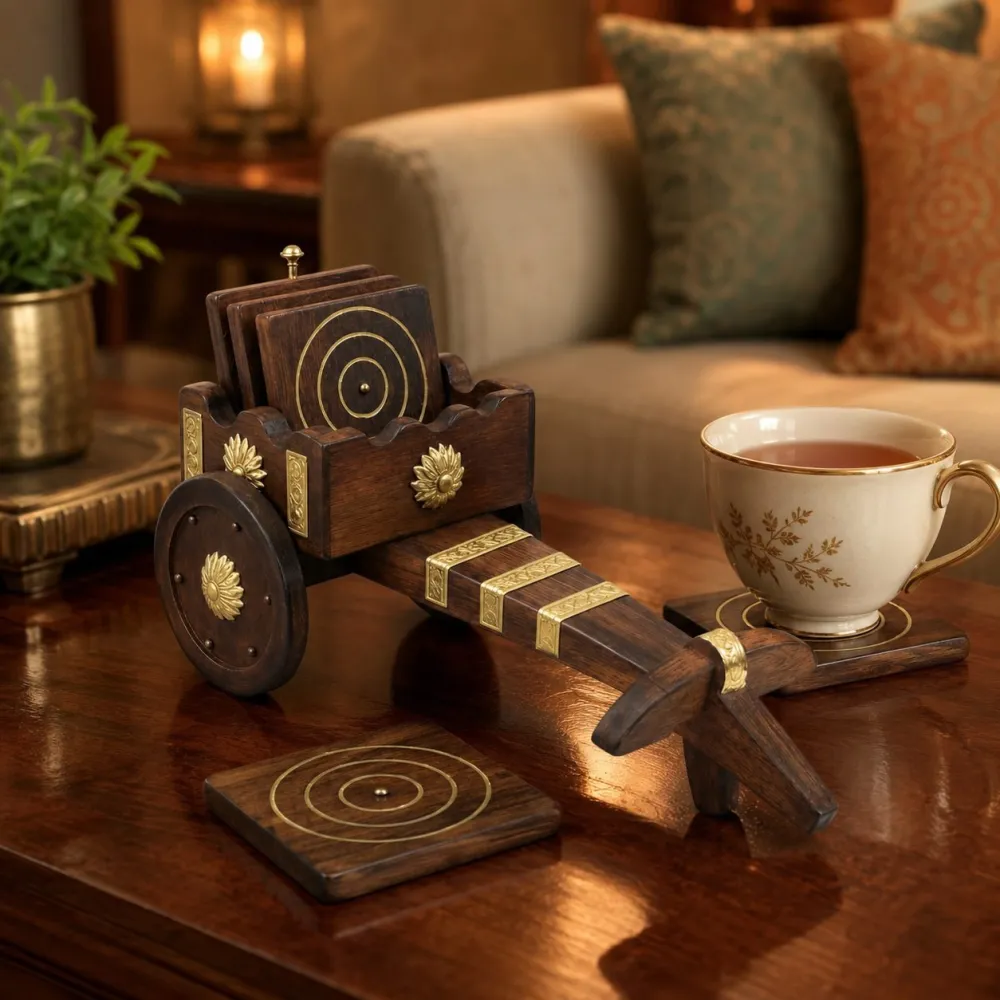
Coasters and small lidded bowls can be used by a household, subject to care and intended-use claims. Verify whether a bowl is approved for food contact before describing it as serveware.
Entryway organisation
A key holder may serve a shared routine, but dimensions, number of hooks, wall material and mounting permission matter. Low-stock products are poor choices for a large event even when the sample fits.
Decorative doorway pieces
A toran can suit festive or wedding-related occasions. Confirm width, hanging method, fire clearance and recipient preference. It should remain optional for homes with restrictions or a different decorative style.
Personal storage as a shared system
A larger jewellery box can organise more than jewellery—subject to its layout—but should not be assumed to serve both people equally. Inspect compartments for watches, rings, chains or other small accessories actually owned.
Current DigiRake Options to Compare
These current products illustrate shared household, décor and storage functions. Check live price, inventory, dimensions, materials and care guidance before ordering.
- Wooden tea-coaster bullock-cart set — shared table-use and display direction.
- Wooden bowl with lid — verify intended contents and cleaning requirements.
- Mango-leaf and marigold toran — doorway décor for suitable homes and occasions.
- Wooden jewellery box, 8 × 5 inch — structured storage; inspect the internal layout.
- Maroon velvet family jewellery box — larger multi-tray storage direction.
- Wooden agarbatti stand, 10 inch — ceremony-related option only where both context and preference fit.
Seller disclosure: DigiRake Store Private Limited sells these products. Listing them does not imply universal couple suitability or a bulk-price promise. Verify the current product page and quantity terms.
Avoid “His and Hers” Assumptions
A couple may not use gendered products, may have different names or may not share every possession. Neutral wording such as “with thanks from our celebration” is safer than labels that assign roles. If personalisation is requested, confirm both names and preferred order from the guest list.
Do not assume every couple is married or uses the same surname. Match the invitation language and respect the information guests provided.
Calculate Quantity Correctly
Begin with confirmed couple units, then add individually invited guests, hosts, helpers and other exceptions. Reconcile the list rather than dividing total attendance by two. Children or additional household members may have a separate gift plan.
Keep a small evidence-based buffer for late confirmations, damaged packaging or list errors. Track opening quantity, units handed out and remaining balance during the event.
Compare Per-Person and Per-Couple Budgets
A ₹200 couple gift is not automatically equivalent to two ₹100 individual gifts once shipping and packing are included. Calculate ready-to-give cost per unit, then divide by the number of represented guests only if that comparison is useful.
Add sample, tax treatment, freight, wrapping, labels, local transport and personalisation. Retail prices and stock can change, and a retail page does not guarantee MOQ, bulk discount or production capacity.
Order a Sample and Test the Handover
Inspect finish, size, weight, edges, closure, colour variation and package protection. If the item must fit into a standard bag, test the actual sample rather than relying only on dimensions. Photograph the approved unit and packaging for receiving checks.
Have two people rehearse the distribution rule with a few fictional guest entries. This reveals ambiguous names, duplicate listings and couples attending at different times.
Pack for Shared Transport
A couple may carry the gift along with coats, food containers or other event material. Use stable packaging with a comfortable handle where weight requires it. Avoid loose ribbons that snag and layers that hide fragile edges.
Keep powder, incense and fragranced products separate from food. Include short material-care or installation notes where useful. Do not make environmental claims about packaging without evidence.
Distribution Scenarios
Both people attend
Hand one gift to either person while thanking both. Mark the couple unit as collected.
One person attends
Follow the pre-agreed rule and say clearly that the gift is for the couple, avoiding an awkward second request later.
They arrive separately
A searchable or alphabetised list prevents double distribution. Do not depend on staff remembering faces.
One person leaves early
Allow collection without waiting for the formal closing. Accessibility and travel needs are more important than a staged handover.
Common Mistakes
- Dividing total guests by two instead of reconciling invitation units.
- Choosing a “couple” gift based on gender roles.
- Personalising surnames without confirmation.
- Ignoring product size, installation or religious preference.
- Assuming a retail listing guarantees event quantity.
- Failing to track couples who arrive separately.
Frequently Asked Questions
Is one return gift per couple acceptable?
Yes when invitations and expectations use a couple or household unit and the rule is applied consistently.
What if only one member attends?
Set the rule before the event. Usually the attending person can collect the shared gift, with the couple unit marked complete.
Should a couple gift be more expensive?
Not necessarily. Use the event budget and ready-to-give cost; utility and thoughtful fit matter more than a fixed multiplier.
How is this different from pooja return gifts for couples?
This article covers broad shared gifting. A pooja-specific choice also needs ceremony relevance, religious preference and product-use considerations.