


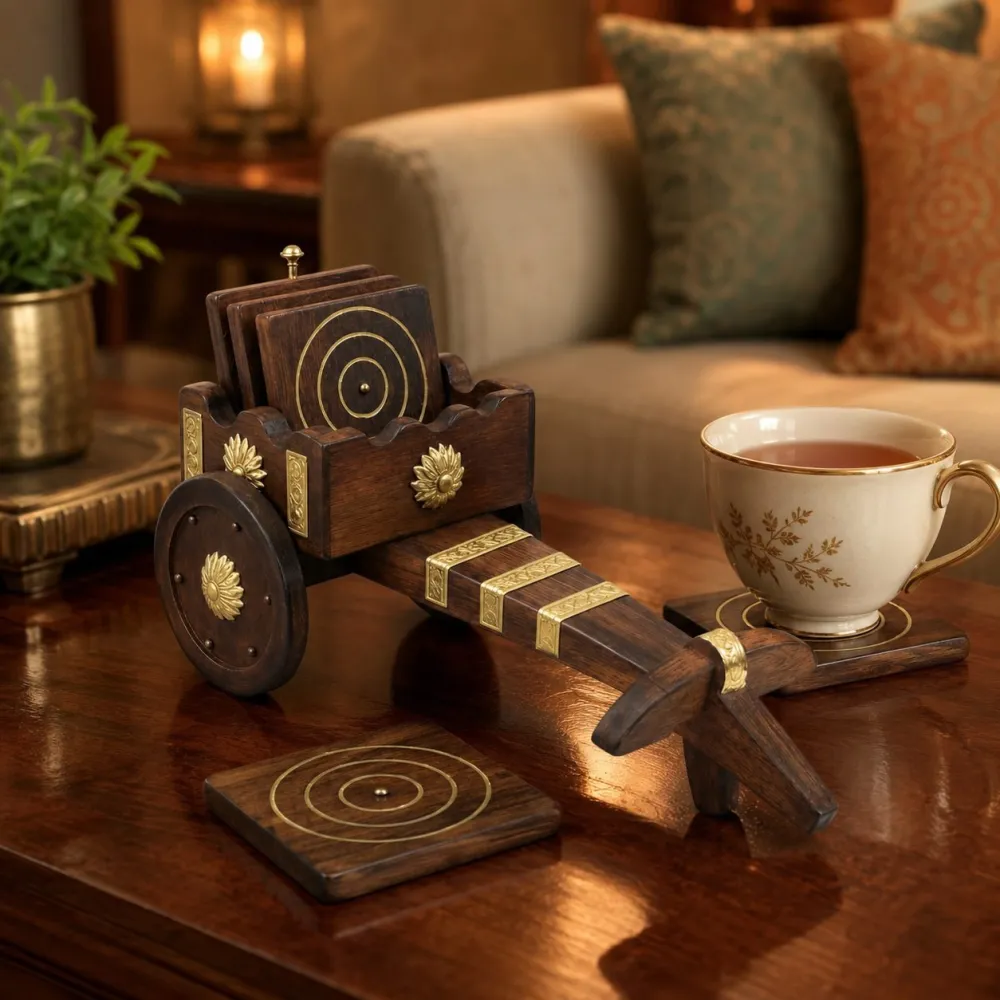
Dussehra return gifts can thank guests, volunteers or performers after a family gathering, society programme, Ramlila-related event or festive meal. They are optional, and practices vary widely across regions. A good plan therefore starts with the exact event and recipient—not a generic “festive” label—then covers stock, samples, packing, safety and distribution.
Identify the Event Before Choosing the Gift
Dussehra and Vijayadashami are observed through different stories, customs and public programmes. Ask the organiser what the gathering includes and when a gift can be handed over without interrupting worship, a performance, procession or meal. A home visit may need one compact gift per household; a community stage programme may need separate appreciation packs for volunteers and performers.
Do not present a retail product as a ritual requirement. Keep worship items, offerings, prasad, performer props and commercial gifts in clearly labelled, separate storage. If the organiser wants a religious image or locally traditional object, let them approve the choice and handling.
Dussehra Return Gift Directions
Neutral household-use gifts
The wooden tea-coaster set can suit a broad adult guest list. A wooden bowl with cap is another small household direction. Check dimensions and care information on the current listing. Do not claim food safety, heat resistance or washability unless the seller documents it.
Reusable organisers
For adult guests who value storage, review the 6×4-inch wooden jewellery box. Describe it as an organiser rather than assuming who owns jewellery. Test the closure, internal size and finished pack before ordering for a large audience.
Incense accessories
Where the recipient group is likely to use them, compare the stainless-steel bamboo-style agarbatti stand, bowl-shaped two-in-one holder, or stainless-steel agarbatti stand with plate. Confirm which incense formats each supports. Include ventilation, stable placement and fire-safety guidance rather than promising ash control or universal compatibility.
Create Different Packs Only for Clear Roles
A community programme may legitimately thank organisers, stage participants and general guests differently. Define these groups before buying and document the reason for each pack. Avoid improvised visible tiers among similar guests. If the budget cannot support one product for the full audience, a shared thank-you note or separately announced volunteer appreciation can be more graceful than random substitutions.
For children, use an age-appropriate product sourced for that purpose; the linked household and incense accessories are not toys. Do not include small pieces, matches, incense or fragile decor in a children’s pack. Verify age guidance and safety labels from the manufacturer.
Build the Quantity Sheet
Start with confirmed households or attendees and add named volunteers, performers and service helpers only according to the organiser’s decision. Create separate rows for each recipient rule. Add a modest reserve for late confirmations, damaged packaging and counting mistakes. Five to ten percent can be a useful range for a medium event, while a small dinner may need just one or two extras.
Track full cost per finished unit: product, tax, freight, outer packaging, printed card, protective material, local transport and assembly. Ask the retailer to confirm current inventory before approving a design. A product visible today can sell out before checkout, so do not print its name or image on cards until stock is secured.
Approve a Physical Sample
Measure the product and the finished gift pack. Test closures and look for rough edges, wobble, scratches, finish variation or parts that loosen in transit. Place the sample in the bag guests will actually carry. If the event is outdoors, test whether ordinary handling causes the label or colour to transfer; use suitable outer protection without creating needless layers.
Keep a photograph of the approved unit beside a ruler. At bulk delivery, inspect pieces from several cartons and layers. Count the batch before personalising it. Put approved, unchecked and rejected stock in separate labelled zones so volunteers do not accidentally pack a damaged unit.
Pack Food Separately
If sweets or dry snacks are added, use sealed food-grade packs carrying the maker’s ingredients, allergen, date and storage information. Do not place unwrapped food beside incense products, fragranced materials, painted surfaces or loose decorative filler. If the event runs outdoors for several hours, confirm whether the food can safely remain at ambient temperature.
Prasad is not the same as a purchased snack or return gift. Follow the organiser’s instructions for its preparation and distribution, and do not put commercial branding on it without permission.
Use Accurate Festive Language
A return gift can symbolise the host’s thanks, but the product itself should not be advertised as guaranteeing victory, protection, prosperity or divine favour. Describe the documented material, colour, dimensions and function. If a finish looks like gold, say “gold-colour” only when that matches the listing; do not imply gold content or plating.
Proofread names and messages in every script used. Ask a fluent reader to check cultural tone and print one physical proof. A concise “Thank you for celebrating with us” is usually more durable than a date-heavy design, especially for surplus units.
Distribution for Home and Public Events
At home, place guest-ready packs near the exit and keep reserve cartons out of view. At a public programme, choose a well-lit table away from electrical cables, cooking, stage access and crowd bottlenecks. Give one helper the recipient list, another the packs, and a third the reserve count for larger audiences.
Do not distribute during a performance or procession unless the organiser has built it into the programme. Use tokens or role-based lists when appropriate. Remove perishable add-ons from gifts for absent recipients, store the remaining items dry, and reconcile the final count after the event.
Common Mistakes
- Assuming one regional Dussehra custom applies to every gathering.
- Calling a commercial gift sacred, blessed or ritually necessary.
- Giving incense accessories to children as toys.
- Creating unexplained gift tiers among similar guests.
- Mixing unpackaged food with incense or decorative surfaces.
- Blocking an exit, stage route or procession path with a gift table.
Frequently Asked Questions
Are return gifts expected at Dussehra?
No. They are optional and should suit the particular family or community event.
What works for a mixed adult audience?
A neutral household-use item is often easier than a personal or devotional choice, but sample quality and recipient needs still matter.
Can volunteers receive a different gift?
Yes, when the organiser defines it as role-based appreciation and applies the choice consistently.
When should distribution happen?
Choose a host-approved moment that does not interrupt worship, performances, processions, food service or safe crowd movement.