


60th birthday return gifts may be planned for a family party, a community gathering or a regional ceremony. Traditions associated with a sixtieth birthday differ by family, language, community and individual preference, so the host’s actual programme should guide the gift—not a universal checklist found online.
This guide covers guest units, traditional and neutral choices, quantity, accessibility, packing and distribution. The linked DigiRake products are adult household, storage, décor or pooja-use items and are not children’s toys.
Clarify the Type of Celebration
A casual birthday meal may call for a compact thank-you token. A larger ceremony may include relatives, priests or officiants, musicians, helpers and several guest groups. Ask the family which parts of the event carry a religious or regional meaning before choosing themed products.
Terms such as Shashtiapthapoorthi, Sashtiapthapoorthi or related regional forms may be used in some Hindu communities for a sixtieth-year observance. Spelling, timing and practice vary. Follow the family’s chosen terminology and qualified local guidance rather than presenting one version as universal.
Choose the Correct Gift Unit
Decide whether the gift is per adult, couple, household or invitation. A ceremony may also use separate acknowledgements for officiants and helpers; those should not automatically be counted as ordinary return gifts.
Reconcile the invitation list row by row. Catering headcount may include children, staff and vendors who follow a different gift plan, so it is not a reliable purchase quantity by itself.
Traditional and Neutral Paths
Pooja-use path
For guests who use them, an incense holder, kumkum container or related accessory can connect to the ceremony. Confirm material, size, intended incense format and safe-use instructions.
Household path
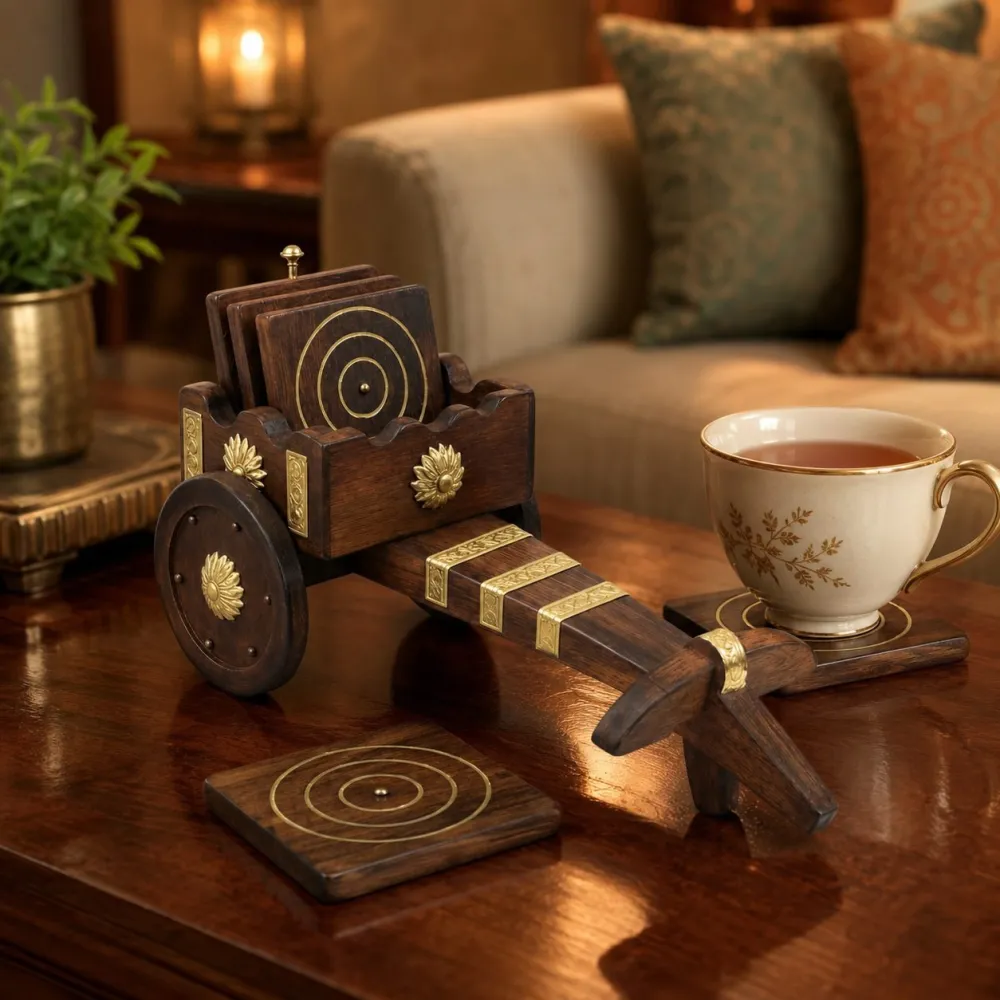
Coasters or a small lidded bowl offer a non-ceremonial direction. Check finish and cleaning claims, and never describe decorative wood as food-safe without explicit documentation.
Personal-storage path
A wooden jewellery box can work for an individual unit when its compartments match the intended use. Avoid assuming that every recipient wears or stores the same accessories.
Festive-décor path
A toran may suit the entrance décor and can carry the event’s visual theme. Door dimensions, hanging permissions and fire clearance vary, so it should not be treated as universally suitable.
Current DigiRake Options to Compare
The live choices below cover ceremony-linked and neutral functions. Verify current price, inventory, materials, measurements and care before ordering a sample or quantity.
- Stainless-steel bamboo-style agarbatti stand — compact pooja-use direction.
- Wooden bowl-shaped 2-in-1 holder — check which incense formats and sizes fit.
- Wooden sindoor box — small ceremony-related storage choice where appropriate.
- Wooden tea-coaster bullock-cart set — neutral household alternative.
- Wooden jewellery box, 6 × 4 inch — personal-storage alternative.
- Mango-leaf and marigold toran — festive doorway option where preference and mounting fit.
Seller disclosure: DigiRake Store Private Limited sells these products. Inclusion does not prescribe ceremony practice or imply universal suitability. Stock, price and specifications can change.
Offer an Alternative Without Making It Awkward
If the main gift has a religious use, keep a functionally comparable neutral choice. The distribution team can ask quietly, “Would you prefer the pooja-use item or the home-use item?” without requesting a reason.
Plan quantities for both choices using known guest context, then retain some flexibility. Avoid labelling guests by belief, health condition or household practice on a public list.
Use Age-Respectful Language
Messages can celebrate gratitude, relationships and a life milestone without jokes about memory, weakness or decline. Ask the honouree to approve any humorous or highly personal wording before it is printed in quantity.
If the event uses a traditional name, confirm spelling in the required language. Transliteration varies, and a printer should not silently “correct” the family’s preferred form.
Check Handling and Readability
Measure complete packed weight. Use packages with a stable base, a comfortable handle when needed and no hidden staples. Test whether lids, latches and wrapping can be opened without excessive force.
Put care information in high-contrast text at a readable size. Avoid glossy, low-contrast gold-on-cream cards even if they match the theme; they can be difficult to read under venue lighting.
Approve a Sample Before Quantity
Inspect the actual dimensions, weight, colour, finish, sharp edges, loose hardware, odour and packaging. For wooden products, agree how natural variation will be handled. For holders, check stability and ash coverage with only the intended format and under safe conditions.
Keep the approved sample, photographs and written specification. On delivery, compare cartons before personalising or repacking the full order.
Calculate Ready-to-Give Cost
Add product price, tax treatment where applicable, freight, sample, labels, bags or boxes, local transport and personalisation. Obtain quantity pricing and dispatch dates in writing. A retail listing does not guarantee wholesale terms or event capacity.
Budget separately for formal acknowledgements, ritual materials and ordinary guest return gifts. Mixing these lines can hide cost overruns and cause the wrong item to be distributed.
Pack Ceremony Products Carefully
Keep powders, incense and fragranced goods separate from food. Protect finishes from rubbing and include concise safe-use or cleaning information. Do not seal damp wooden or fabric-covered products inside plastic.
If the event includes travel for many guests, favour compact packages and tell guests about fragile or restricted contents before they leave. Current carrier and security rules should be checked directly.
Run an Accessible Distribution Desk
Place the desk away from steps, smoke, crowd bottlenecks and vehicle movement. Allow early collection and do not require guests to wait for a ceremonial final handover. Ask before helping someone carry a package.
Use an alphabetised or coded list, mark each unit collected and count the balance after each major departure period. Couples arriving separately need a clear shared-unit rule.
Planning Checklist
- Confirm the family’s celebration format and terminology.
- Define individual, couple, household and special-recipient units.
- Choose a traditional path, neutral path or quiet choice system.
- Check dimensions, weight, closures and readable information.
- Approve a representative sample and written specification.
- Calculate full ready-to-give cost.
- Separate incense or powder products from food.
- Plan an accessible, recorded distribution process.
Frequently Asked Questions
Must a 60th birthday return gift be religious?
No. The celebration format and recipient preferences determine whether a pooja-use or neutral household gift fits.
Is one gift per couple acceptable?
Yes when invitations and the guest list use a couple unit consistently. Decide exceptions before the event.
Can I use “golden” in the gift label?
You may use it as a colour or theme description, but do not imply precious-metal content for the product without evidence.
Are these products appropriate for children?
They are presented as adult household, storage, décor or pooja-use items, not toys. Plan child-specific favours separately.